


Supreme Court Orders Indian Oil to Pay ₹12 Lakh Compensation to Woman Denied Job Over ‘Cannot Lift Cylinder’ Excuse
The Supreme Court on Thursday directed Indian Oil Corporation (IOC) to pay ₹12 lakh compensation to Sumitra, a resident of Guda village in Haryana, after determining that the public sector undertaking had denied her employment solely on the basis of her gender, which constituted an insult to women’s dignity.
The dispute originates from a recruitment process conducted 38 years ago in 1988 for IOC’s LPG bottling plant. At that time, a committee headed by the Deputy Commissioner had recommended 49 candidates for various positions including khalsa, chaprasi, and refilling helper. Sumitra was among those selected and appeared for the interview, but she was ultimately not appointed, despite other candidates from the same list receiving appointment letters.
The trial court examined the case and concluded that Sumitra met the required qualifications for the position. The court also relied on witness testimony which indicated that the sole reason for her rejection was her gender. Following this favorable verdict, IOC filed an appeal, and the First Appellate Court overturned the trial court’s decision on August 6, 1993. The matter was subsequently referred to the Punjab and Haryana High Court, which in October 2025 reversed the lower court’s order that had instructed IOC to appoint Sumitra either as a laborer or in another appropriate position.
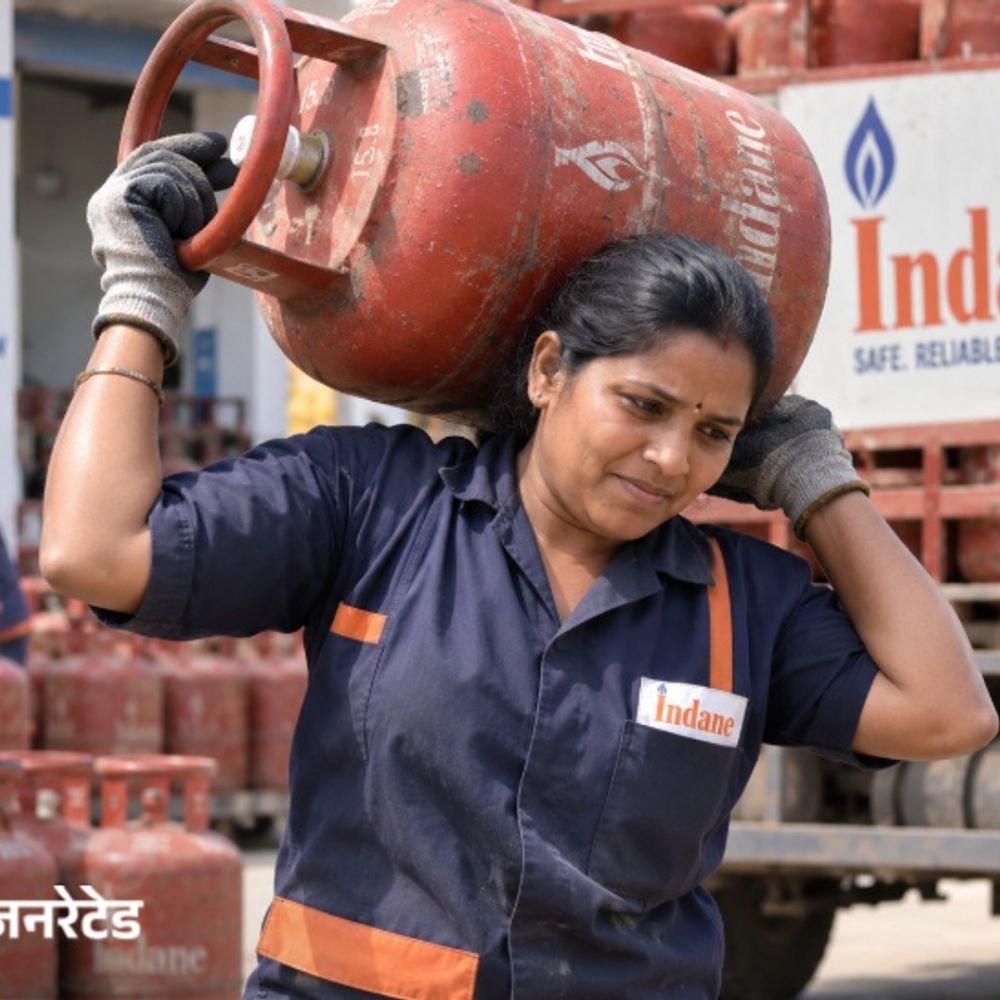
Sumitra then approached the Supreme Court challenging the High Court’s October 2025 verdict. During the hearing, IOC’s legal representative argued that the nature of the work involved lifting heavy LPG cylinders and working night shifts, implying that authorities might have considered the female candidate unsuitable for these tasks. The Supreme Court questioned this rationale, asking whether women do not lift gas cylinders within their homes on a daily basis. The court emphasized that while India regularly professes respect for women and equates them to goddesses, a government-owned company had committed an affront to a woman’s dignity by refusing her employment based on stereotypical assumptions about physical capability.
Since Sumitra has now attained retirement age, the Supreme Court deemed actual appointment impractical and instead ordered IOC to pay ₹12 lakh as compensation.
The judgment also references the court’s broader observations on women’s status in society, reinforcing the principle that gender cannot serve as a basis for employment discrimination in public sector enterprises.
In a related context, the Supreme Court also addressed the valuation of domestic labor in road accident compensation cases, ruling that the contribution of homemakers in terms of family care and household management should be monetarily assessed at a minimum of ₹30,000 per month, equivalent to ₹3.6 lakh annually, when calculating damages in cases involving the death of housewives in road accidents.
The 38-year duration of this case from 1988 to the present reflects the extended litigation period typical in discrimination cases, while the Supreme Court’s intervention provides a remedy for Sumitra who had waited through multiple levels of litigation. The compensation order offers a monetary remedy where actual employment is no longer feasible due to the petitioner’s age.
The court’s observation regarding women lifting cylinders at home serves to dismantle the employer’s justification for discrimination, pointing out the contradiction between societal rhetoric about women’s strength and practical workplace exclusion. By referencing the Deputy Commissioner’s committee recommendation and the initial selection of Sumitra, the judgment confirms that the rejection was not based on merit or qualification but on gender bias.
The inclusion of the homemakers’ labor valuation in the same judicial context reflects the court’s approach to recognizing women’s economic contributions, whether in formal employment or domestic spheres. The ₹30,000 monthly valuation for household work in accident cases parallels the compensation awarded to Sumitra, both aiming to quantify aspects of women’s labor that have historically been undervalued or ignored.
This ruling impacts future recruitment practices across government enterprises, emphasizing that physical assumptions about women’s capabilities cannot justify employment discrimination. The Supreme Court’s directive to Indian Oil Corporation serves as a reminder that public sector companies must adhere to constitutional principles of equality in their hiring processes.
The case further demonstrates the importance of witness testimony in proving discriminatory intent, as the trial court’s reliance on a witness who confirmed gender-based rejection played a crucial role in the initial finding against IOC. Despite the appellate reversal in 1993 and the High Court’s 2025 decision, the Supreme Court ultimately restored the principle that gender discrimination in employment violates human dignity.