

The disappearance and eventual discovery of three female bodies in a remote village in Gujarat’s Surat district has come to light after a four‑year investigation. The case, centred in Kosamba’s Vadfalia locality, involved the alleged murder of three elderly women – Shantaben, Bhagvati and Manjulaben – by a married couple, Madhavdas and his wife Urmila. The crimes, committed between February and October 2022, were meticulously concealed, but a series of events in early 2025 led to the unearthing of human remains and the arrest of the perpetrators.
**Chronology of the killings**
*First murder – 25 February 2022*
The first victim was Bhagvati, the sister of Urmila. According to police records, Madhavdas and Urmila used a pillow to suffocate Bhagvati while she was asleep. The couple claimed she had died from tuberculosis, a condition she suffered from, and they buried her on the family’s property. The death was recorded as natural, and no further investigation was prompted at the time.
*Second murder – 19 July 2022*
The second victim was Manjulaben, Madhavdas’s mother. She was paralysed and bed‑ridden at the time of the killing. The couple again employed a pillow to block her breathing, later announcing that she had succumbed to paralysis. The body was cremated, again under the guise of a natural death.
*Third murder – 7 October 2022*
The final victim was Shantaben, Urmila’s grandmother. The method was similar – a pillow pressed against her face while she slept. After the killing, the couple placed the body in a large drum, filled it with three bags of cement and water to seal it, and stored it in the house. Approximately three and a half months later, they exhumed the drum, removed the corpse along with the cement block, and buried it in a shallow pit dug in the courtyard. A layer of cement was poured over the pit to mask the disturbance of the ground. To explain the death, the family was told that Shantaben had died of COVID‑19, a narrative that was reinforced by the pandemic‑related restrictions on handling bodies at the time.
**Turning point – a false complaint**
In early 2025, a domestic dispute escalated between Madhavdas and Urmila. In the heat of the argument, Madhavdas approached the local police station and lodged a complaint accusing his wife and his cousin Afzal (also known as Poto Diwan) of murdering Shantaben. The complaint was taken seriously, and the Ahmedabad Crime Branch was called in to assist Kosamba police.
The investigators first questioned Afzal. He was questioned extensively but no evidence linked him to the crime scene or to any of the three deaths. The focus then shifted back to Madhavdas. During prolonged interrogation, he admitted that the complaint was a ploy to divert suspicion away from himself and his wife. He confessed that he and Urmila had carried out all three killings, describing in detail how they used the pillow method, disposed of the bodies, and fabricated the COVID‑19 story for Shantaben’s death.
**Discovery of the remains**
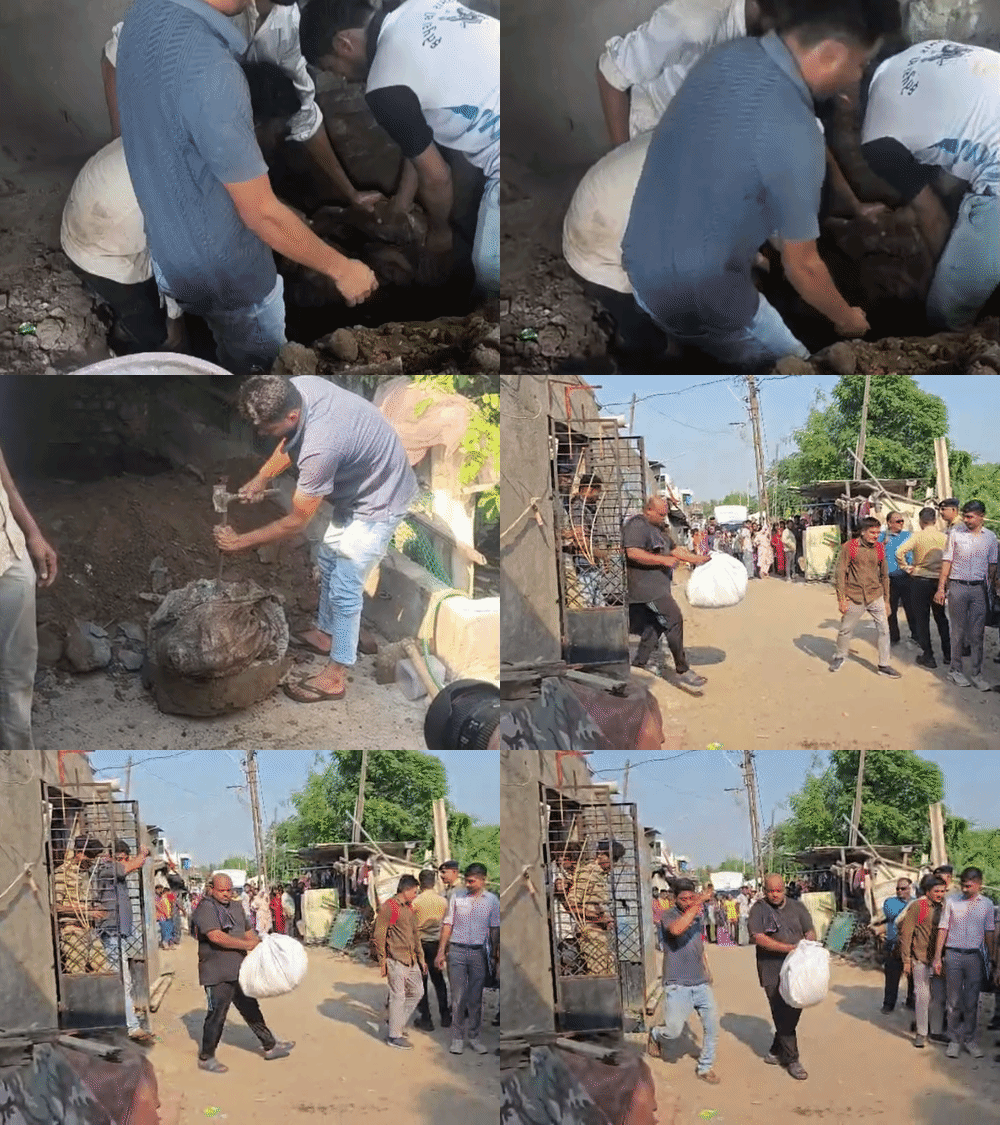
Based on Madhavdas’s confession, police conducted a systematic excavation of the courtyard at the Vadfalia residence. The team, comprising officers from both Kosamba police station and the Ahmedabad Crime Branch, dug through a thick cement layer and reached a depth of roughly 4‑5 feet. At that level, they uncovered human skeletal remains – the buried bodies of the three women. The bones were collected carefully and sent for forensic analysis to confirm identity and cause of death.
**Community reaction and investigation outcome**
Neighbours of Shantaben expressed shock at the revelation. For four years they had accepted the explanation that she had died of COVID‑19, a narrative that had been reinforced by the pandemic’s restrictions on funeral rites. The discovery has reopened questions about how such a series of deaths could go unnoticed in a small community.
Police have arrested both Madhavdas and Urmila on charges of murder, conspiracy, and concealment of death. Afzal, whose name had initially been suspected, was released after investigators found no substantive evidence against him. The case is being handled jointly by Kosamba police and the Ahmedabad Crime Branch, highlighting the importance of inter‑agency cooperation in solving complex, long‑standing crimes.
**Significance of the case**
This investigation underscores how personal disputes can escalate into multiple homicides when perpetrators exploit social trust and pandemic‑related limitations. It also demonstrates the critical role of persistent policing and forensic science in uncovering truths that were deliberately buried. As the forensic reports are awaited, the case remains a stark reminder of the need for vigilance in detecting suspicious patterns of death, especially within family settings.
The unfolding of the case after four years reflects both the determination of law‑enforcement agencies and the tragic cost of concealed violence in rural Gujarat.